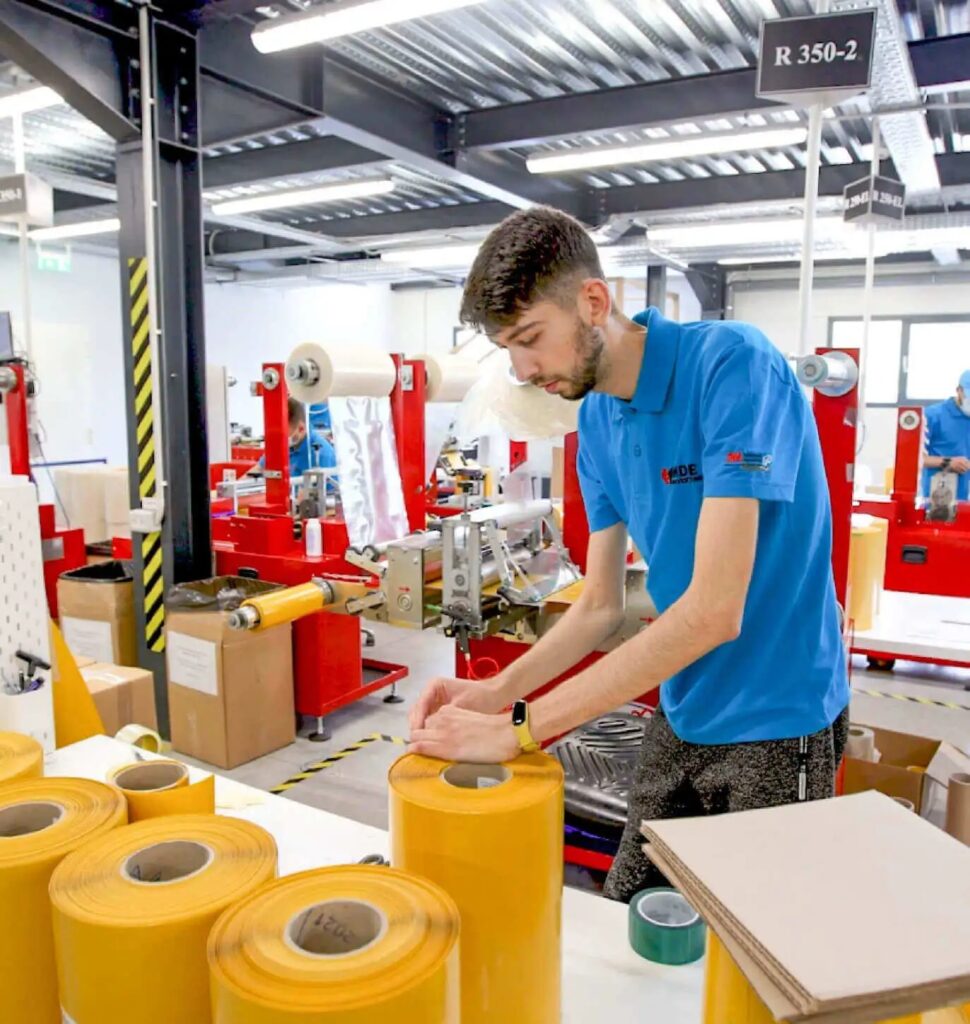
What does efficiency mean in manufacturing? Is it about materials, machinery, or expertise? Is it about a single thing or multiple factors? An honest answer is that efficiency is the result of many decisions and actions. It’s true that materials, components and processes influence how efficient a production line is. But there’re more aspects that matter a lot.
In the industrial world, there are many processes that require precision and attention. When these aren’t properly monitored and controlled, problems or variations occur. To prevent these issues and also other ones, material conversion plays an important role. By transforming a raw material into a custom adhesive component like a fascia car, converters help manufacturers optimize their operations.
How is this possible and what exactly are professional converters doing? It’s possible because of modern technologies and relevant expertise. Among these, there are multiple other assets that help these experts to innovate and help many industries. Their work and capabilities can be reflected in how modern industries operate today.
Adapting materials to the realities of the production line
Factories work with different types of materials to create different types of products, which is normal. But abnormalities appear when a specific material is needed in a specific shape or form. In this case, professional converters use methods like die cutting to process that material in a customized way.
From this operation results a component that doesn’t require:
- Manual cutting
- Trimming
- Repositioning
- Adjusting
Basically, through a customized adhesive component, multiple extra steps can be eliminated. This means faster production and assembly lines, as well as fewer variations. Every technical part is prepared in the exact form and with the exact dimensions as the application requires.
Materials matter a lot because they could create other issues if they aren’t properly selected. So, specialized companies make sure to evaluate a project and its specifications thoroughly before material selection. Another important aspect is that a manufacturer could benefit a lot from a collaboration with a company recognized as a 3M Preferred Converter.
How precision processing reduces variation and waste
Whether it’s about production, assembly or other operations within a factory, variation is a key factor that can affect their efficiency. It’s pretty common for small differences to appear, however if they persist, the output becomes unstable. Even if they’re small, they can accumulate over time and result in waste and additional costs.
Here’s how precision conversion can support manufacturers’ operations:
- Dimensions and tolerances are kept consistent across batches
- The scrap is reduced because the components are perfectly adapted
- The rework is minimized because materials behave correctly
- The quality is maintained stable
- Repeatable results are supported in both automated and semi-automated lines
Adhesive material conversion offers something more than just some technical parts that are integrated in specific configurations. It offers more control over every process and over the quality of the final product. This is possible even with a single, well-developed component that can have multiple functions.
Technical collaboration that sustains long-term efficiency
In manufacturing, a single improvement is rarely enough to make a big change. However, investing in an innovative solution could make a big difference. Usually, everything is about continuous refinement based on testing, feedback and experience. But how would it be for manufacturers to achieve something that has already been tested thoroughly?
In this dynamic environment, companies are able to survive and grow when they have support. Luckily, the type and level of support they need could be provided by specialized converters. At the same time, it’s very important for them to clearly define their problems, challenges and goals. This is what helps converters offer the right help in return.
To better understand the impact of this type of collaboration, here’s the contribution of a converter:
| Contribution | What it means for a manufacturer |
| Early project evaluation | Potential issues are identified before the work begins |
| Decision-making based on real operating conditions | Materials and designs perform well in actual environments |
| Continuous adjustments before delivering components | Components don’t require corrections on the line |
| Long-term technical support | Improvements can be implemented with confidence when scaling or modifying products |
Practical solutions built for the future
Efficiency in manufacturing can be built on consistency and practical solutions that are able to support it. In this case, material conversion is a practical solution that manufacturers can rely on and a direct contributor to stable and smooth processes. Therefore, deciding to work with a professional converter could mean multiple advantages for many industries.