
Abstract
Fruits are the cornerstone of our healthy diet and must be included as 1 half plate in each meal. Nature provided us with different varieties of fruits that include a variant collection of nutrients, energy and bioactive dietary contents. Beyond providing basic nutrition to the body they also consist of health promoting benefits. By their miraculous antioxidant effects fruits prevent your body from any kind of chronic diseases if taken as advised according to one’s body type. If someone does not take a proper diet then they must be concerned with poor health and it is necessary to add a high fruit diet to prevent any health issues associated with low dietary contents. Each fruit includes different health benefits and in this article we are going to discuss all about pomegranate fruit, let’s discuss below
Introduction
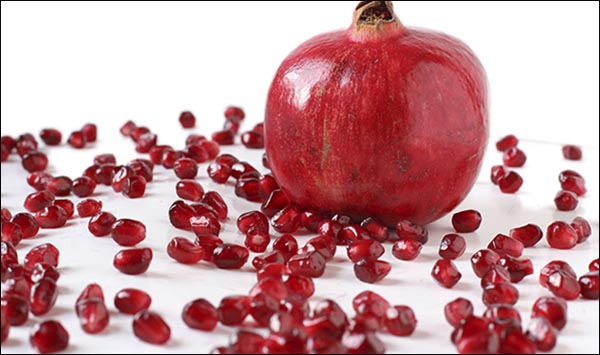
Pomegranate is a small tree or bush which grows between 5-7 meters height, shape varies from lance-shaped to elliptic, leaves are of green colour and measuring 7.5 cm, flowers are of orange to tiny red in color and its petals are of lance-shaped. Fruit size is that of large oranges which have leathery smooth skin that are brownish yellow to red in color. Mostly pomegranate is cultivated in the Americas and in the Arabian Peninsula, India and Afghanistan. Although it is cultivated in an extensive range of climates, the best fruit grows in the atmosphere which is high in temperature and dry during the ripening period of fruit. Further we will discuss this amazing fruit in detail.
Composition
You will be surprised to know that peel of the pomegranate fruit is a great source of miraculous bioactive compounds such as phenolics, flavonoids and various mineral compounds such as nitrogen, potassium, magnesium, sodium, calcium and complex polysaccharides and it consists of half of the part of the fruit. The remaining half of fruit is edible which consists of 40% of arils and 10% of seeds. Arils consists of 85% of water, 10% of sugar (mainly fructose and glucose) and its 1.5% includes pectin and organic acids such as malic acid, citric acid and ascorbic acid.
Nutritional Values
Nutrient Facts
- Energy = 83 kcal
- Water = 77.93 gm
- Total lipid = 1.17 gm
- Protein = 1.67 gm
- Carbohydrates = 18.70 gm
- Sugar = 13.67 gm
- Fiber = 4 gm
Vitamins
- Vitamin C = 10. 2 mgm
- Vitamin B1 = 0.067 mgm
- Vitamin B2 = 0.035 mgm
- Vitamin B3 = 0.293 mgm
- Vitamin B6 = 0.075 mgm
- Folate 38 mgm
- Vitamin E = 0.60 mgm
- Vitamin K = 16.4 mgm
Minerals
- Iron = 0.30 mgm
- Calcium = 10 mgm
- Magnesium = 12 mgm
- Potassium = 236 mgm
- Phosphorus = 36 mgm
- Zinc = 0.35 mgm
- Sodium = 3 mgm
Ayurvedic View of Pomegranate
Pomegranate as per ayurveda is known as dadima (Punica granatum) consists of amla (sour), madhur (sweet) and kshaya (astringent) taste. Physically it is light and possesses unushna potency which means neither too hot nor too cold. As per acharya, charaka pomegranate is placed in hridya (herbs that are good for the heart) and balya (herbs that provide strength) gana. Effect on dosha depends upon different varieties- there are 3 types of pomegranate that we are mentioning along with their benefits below:
- Sour – The sour type of pomegranate increases pitta dosha and pacifies kapha and vata dosha.
- Sweet – Best while you are having a fever as it reduces burning sensation and excessive thirst. It relieves atisaar (diarrhea), grahani (irritable bowel syndrome) and ulcerative colitis. It provides strength to the body and boosts up immunity to a very effective extent.
- Sweet Sour – This variety of pomegranate induces the digestive fire and relevies anorexia.
Health Benefits of Pomegranate
- Pomegranate is enriched with antioxidants thus helps in reducing the production of free radicals and prevents the damage of cells.
- It is also good for the heart as mentioned earlier that it is kept in hridya gana which means the herbs that are good for the heart. It improves the blood flow and restricts coronary artery thickening. Dadima is effective in preventing the accumulation of cholesterol in the arteries.
- This juicy fruit improves your digestion in initiating the digestive fire and thus aids in relieving all kinds of digestion related issues.
- If you are thinking about weight loss then it helps you alot. Due to its rich fiber content it keeps your tummy full for a long time and reduces hunger when initiates in losing weight.
- Someone concerned with high blood pressure then just starts eating this fruit. It helps in lowering your high blood pressure as it lowers the levels of ACE (Angiotensin converting enzyme).
- Anemia is a general health concern nowadays and if you are one of them, start taking pomegranate juice from now onwards. As it has abundance of vitamin K & C, fiber and potassium, so all these initiates the absorption of iron which helps in increasing the hemoglobin levels which in turn corrects anemia.
- Cancer – A life threatening condition but the chance of having cancerous disease is reduced by the regular consumption of pomegranate. It is also effective in those who are already suffering from cancer as it inhibits the rate of proliferation of the cancerous cells. Pomegranate may help in invasion or metastasis of cancerous cells.
- Fertility issues are more common worldwide but you can solve it by adding pomegranate to your diet. It aids in improving the quality of sperm and by promoting the rush of blood to the uterus initiates conception.
- As we studied earlier it is full of antioxidants so by reducing free radical damage it works miraculously in providing an anti-ageing effect to the skin.
Here we learn the health benefits of pomegranates. Now we are going to discuss the therapeutic uses of pomegranate further.
Therapeutic Uses of Pomegranate
- Bleeding disorders: For internal bleeding a fruit peel decoction is beneficial and for nasal bleeding you can use the flower juice as nasal administration.
- Dysentery: Decoction of fruit skin of pomegranate is also helpful, in relieving diarrhea by giving 15 – 20 ml of decoction 3 – 4 times a day.
- Skin rashes: You can also apply pomegranate juice over the skin rashes while mixing with equal amounts of aloe vera into it.
- Acidity: Pomegranate possesses an alkaline nature so it wonderfully acts as an antacid. Consuming 50 ml of juice twice a day will increase acidity.
- Burning eyes: The diluted juice of the fruit administered in the eyes will reduce the burning sensation.
- Ulcerations: If someone is suffering from ulceration in the gut the juice of pomegranate reduces the inflammation and burning sensation due to ulcers and has a ropana (healing) effect which initiates the healing of the ulcers. Due to this, pomegranate is useful in diseases such as duodenal ulcers, crohn’s disease, ulcerative colitis, etc.
Conclusion
Fruits are the cornerstone of our healthy diet and must be included as 1 half plate in each meal. Nature provided us with different varieties of fruits that include a variant collection of nutrients, energy and bioactive dietary contents. Each fruit includes different health benefits and in this article we discuss all about pomegranate fruit. Pomegranate is considered as a red jewel for health as it includes various health benefits such as antioxidant effect, heart friendly, kindles the digestive fire, reduces weight, lowers high blood pressure. Pomegranate is effective in various disorders such as dysentery, bleeding disorders, ulcerative colitis, diarrhea, crohn’s disease and various health concerns related to the gut. So you must consume pomegranate in your day to day life to prevent you from various health concerns and to alleviate your diseases.


