
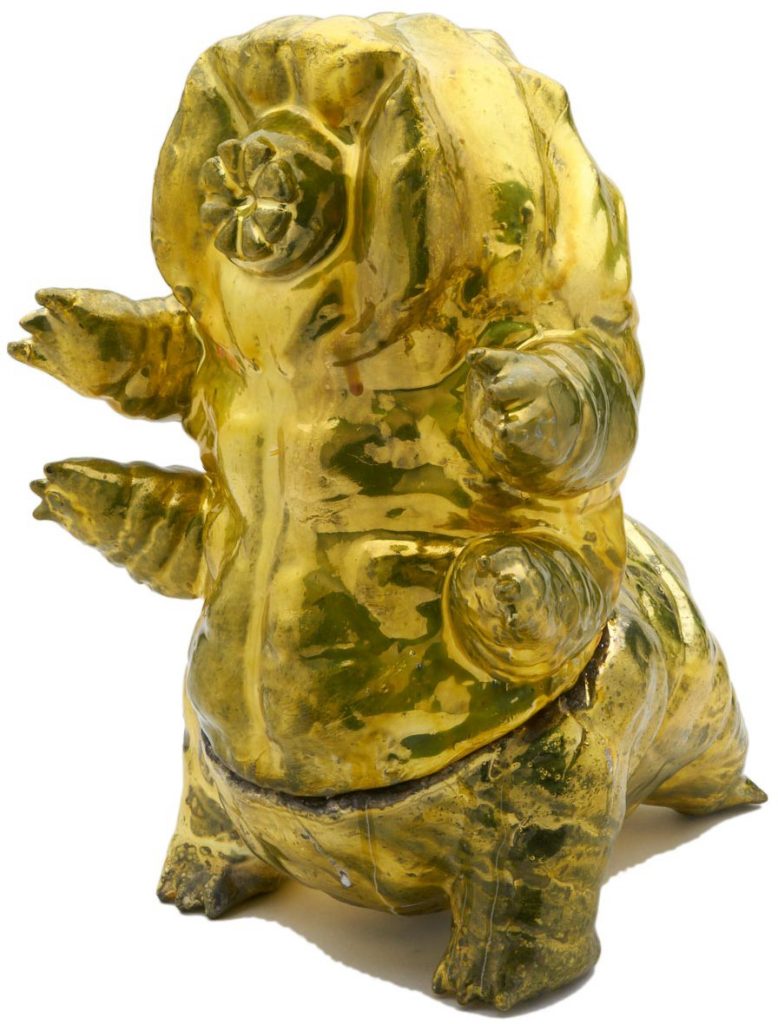
What is tardigrades?
Tardigrades were first discovered in 1773 by the German zoologist Johann August Ephraim Goeze. He initially called them “little water bears” due to their bear-like appearance when viewed under a microscope. Tardigrades, also known as water bears, are microscopic animals that are known for their incredible resilience and ability to survive in extreme conditions. Tardigrades can be found in a wide range of environments, including terrestrial, marine, and freshwater ecosystems. They are particularly abundant in mosses, lichens, and leaf litter, where they feed on plant cells, algae, and small invertebrates, and they have been known to survive exposure to high temperatures, extreme pressures, radiation, and even the vacuum of space. In this article, we will explore the world of tardigrades in detail, from their anatomy and behavior to their remarkable ability to survive in harsh environments.
Anatomy and Physical Characteristics Tardigrades are small, segmented animals that are typically less than 1.5 millimeters in length. They have four pairs of legs, each with sharp claws that allow them to grip onto surfaces, and a distinctive barrel-shaped body. The body is covered in a tough, flexible cuticle that helps to protect the animal from environmental stressors.Tardigrades have a simple digestive system, with a mouth and an anus, and they feed on a variety of microorganisms such as algae, moss, and lichens. They also have a simple nervous system, with a cluster of nerve cells called a ganglion that controls their movement and behavior.
One of the most fascinating aspects of tardigrades is their ability to enter a state of suspended animation, called a tun state, in response to harsh environmental conditions. During this state, the animal’s metabolism slows down to a fraction of its normal rate, and it can survive for years without food or water. Behavior and Reproduction Tardigrades are slow-moving animals that typically crawl around on surfaces using their legs and claws. They are able to survive in a wide range of temperatures and humidity levels, and can be found in environments ranging from tropical rainforests to the frozen Arctic tundra.Tardigrades are able to reproduce both sexually and asexually. In sexual reproduction, males transfer sperm to females, which then lay eggs. In asexual reproduction, the animal’s body splits into two or more pieces, each of which can grow into a new individual.Tardigrades have a remarkable ability to regenerate lost body parts. If a leg or other body part is lost, the animal can often regrow it over time.
Survival in extreme environments perhaps the most remarkable aspect of tardigrades is their ability to survive in extreme conditions that would be lethal to most other animals. Tardigrades are able to survive exposure to high temperatures, extreme pressures, radiation, and even the vacuum of space.One of the key factors that allows tardigrades to survive in extreme conditions is their ability to enter a tun state, in which their metabolism slows down to a fraction of its normal rate. When tardigrades enter the tun state, they undergo several physiological changes. They lose almost all of their body water content and retract their legs and head, effectively curling up into a desiccated ball or tun. This extreme dehydration protects their cells and vital biological molecules from damage caused by the environmental stressors.
In the tun state, tardigrades can remain dormant for extended periods, sometimes years or even decades, until they encounter more favorable conditions. When conditions improve, they can rehydrate and “wake up” from their suspended animation, resuming their normal metabolic activities and reproductive processes.The ability to enter the tun state and survive such extreme conditions is one of the most remarkable features of tardigrades and has captured the interest of scientists studying extremophiles and the potential applications of tardigrade biology in various fields, including biotechnology and space exploration.Tardigrades are also able to withstand extreme temperatures, both hot and cold. Some species are able to survive temperatures as high as 150 degrees Celsius, while others can survive being frozen solid for long periods of time.
In addition to their ability to survive extreme temperatures, tardigrades are also able to withstand extreme pressures. Some species have been found living in the deepest parts of the ocean, where pressures can exceed 1,000 times that of the surface. Tardigrades are also able to survive exposure to ionizing radiation, which can cause damage to DNA and other cellular structures. They are able to repair this damage using a variety of strategies, including reassembling damaged DNA molecules and creating protective proteins that shield cellular structures from damage. Besides, tardigrades have been shown to be able to survive in the vacuum of space. Tardigrades have been sent into space on several occasions to study their ability to survive the harsh conditions of outer space. Some experiments have shown that tardigrades can endure the vacuum of space, cosmic radiation, and extreme temperatures, which has implications for astrobiology and the search for extraterrestrial life.
Tardigrades have become the subject of extensive scientific research due to their unique adaptations. Scientists are interested in understanding how they survive such extreme conditions and whether their resilience can be applied to various fields, such as biotechnology and space exploration. In summary, tardigrades are fascinating microorganisms with a rich history of scientific discovery and exploration. Their remarkable resilience and adaptability to extreme conditions have made them a subject of interest in various scientific disciplines and have even raised questions about their potential role in future space exploration and biotechnology.


