Protecting moisture-sensitive samples is essential when even small changes in humidity can affect quality, stability, or test results. Whether you handle chemicals, powders, electronic components, biological materials, or prepared specimens, the right desiccator gives you a controlled storage environment. To make a practical choice, you should consider your sample requirements, capacity, humidity control, construction, visibility, and day-to-day laboratory workflow.
Start With Your Sample Protection Requirements
Before choosing a desiccator, identify exactly what you need to protect. Some samples only require protection from ambient humidity, while others need a much drier environment for extended storage.
Consider the following questions:
- Is the sample highly sensitive to moisture?
- How frequently will you access the stored material?
- How much material must you store at one time?
- Do you need temporary protection or long-term storage?
- Will the samples require individual containers or shelves?
If you are storing hygroscopic powders, reagents, chemicals, or other moisture-sensitive materials, you should prioritize reliable humidity control and easy monitoring.
You should also consider how often the door or lid will be opened. Frequent access can introduce humid air, so a design that helps maintain stable internal conditions can be particularly useful.
Choose the Right Desiccator Type
Laboratory desiccators are available in different configurations, and each option can support different storage needs.
A conventional desiccator typically uses a desiccant to remove moisture from the enclosed space. This approach can be suitable when you need simple, passive moisture protection.
For applications requiring closer humidity control, you may prefer an electronically controlled dry cabinet or automatic desiccator. These systems can regulate internal humidity with less dependence on manually replacing or regenerating desiccant.
When selecting a laboratory desiccator for moisture-sensitive sample storage, match the technology to the sensitivity of your materials rather than choosing based only on cabinet size or appearance.
Check Capacity and Internal Organization
Capacity directly affects how efficiently you can use your laboratory space. A compact unit may be appropriate for a small number of samples, while a larger cabinet can accommodate multiple containers, batches, or frequently used materials.
Measure the available installation area before ordering. Check the cabinet’s external dimensions as well as its internal usable space.
You should also examine:
- Number and spacing of shelves
- Maximum shelf load
- Door or lid clearance
- Container dimensions
- Vertical storage space
- Accessibility of individual samples
Avoid selecting a cabinet that is unnecessarily large. Excess capacity can consume valuable laboratory space without providing a practical benefit. At the same time, overcrowding can make samples difficult to organize and may interfere with efficient moisture protection.
Evaluate Construction and Visibility
Your desiccator should be built for the environment in which you intend to use it. Look for materials that provide appropriate durability, chemical resistance, and ease of cleaning.
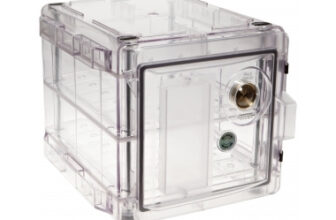
A transparent door or viewing panel can make sample identification easier because you can inspect stored materials without repeatedly opening the enclosure. This can be especially helpful when you need to minimize unnecessary exposure to ambient humidity.
Pay attention to seals and door construction as well. A dependable seal helps reduce unwanted moisture exchange with the surrounding laboratory environment.
If your work involves chemicals or corrosive materials, verify that the cabinet’s construction and internal components are compatible with those substances.
Consider Humidity Monitoring and Control
Humidity management is one of the most important factors when protecting moisture-sensitive samples. You should determine the humidity range required by your materials and select equipment capable of supporting that requirement.
A humidity indicator or digital monitor allows you to check internal conditions without relying on assumptions. For more demanding applications, active humidity control can provide greater consistency than a basic desiccant-based setup.
You should establish a routine for checking humidity levels, inspecting seals, and maintaining the moisture-control system. Record readings when sample integrity is critical so you can identify changes before they affect stored materials.
Match the Desiccator to Your Laboratory Workflow
The best desiccator is one that fits naturally into your daily procedures. Consider where you will install it and how staff will access it.
Place the unit somewhere convenient but away from unnecessary sources of heat, moisture, splashing, or contamination. Keep enough clearance around the cabinet for normal operation and maintenance.
Think about sample labeling and organization too. Clearly labeled shelves, trays, and containers can reduce handling time and prevent unnecessary door openings.
If several users access the same storage unit, establish simple procedures for opening, closing, loading, unloading, and monitoring the desiccator. Consistent handling helps maintain the intended storage conditions.
Make a Practical Desiccator Selection
Selecting a laboratory desiccator should begin with the protection requirements of your samples. Evaluate moisture sensitivity, capacity, construction, sealing, humidity monitoring, accessibility, and maintenance before making your decision.
You can explore moisture-control solutions from Global Lab Supply for laboratory sample protection and controlled storage to compare options suited to different laboratory requirements.
If you need help identifying an appropriate configuration, contact us today for laboratory desiccator selection assistance.
The right equipment can help you maintain better sample organization and reduce unnecessary exposure to environmental moisture.
Frequently Asked Questions
What is a laboratory desiccator used for?
A laboratory desiccator is used to protect moisture-sensitive samples, chemicals, powders, specimens, and other materials from humidity. Depending on the design, it can use a desiccant or active humidity control to maintain a drier internal environment.
How do you choose the right desiccator size?
Choose a size based on the quantity and dimensions of the materials you need to store. Measure your available laboratory space and compare it with the unit’s external dimensions and usable internal capacity.
Are all laboratory desiccators humidity controlled?
No. Some rely on passive desiccants, while others use active electronic humidity-control systems. Your choice should depend on the moisture sensitivity of your samples and the consistency of humidity control you require.
Why is a good seal important in a desiccator?
A reliable seal helps limit the exchange of humid outside air with the dry internal environment. This can help maintain more stable conditions and reduce unnecessary moisture exposure when samples are stored.
How should you maintain a laboratory desiccator?
Follow the manufacturer’s maintenance instructions. Regularly inspect seals, monitor humidity, keep internal surfaces clean, check the moisture-control system, and replace or regenerate desiccant when required.